Pet Clothing Size Guide and Measurement Standards: Practical Guide for Knitted Sweaters
Pet Knit Sweater Size Standards: A Production Guide to Sizing, Measurements & Customization
In pet apparel supply chain management, the scientific rigor of a size system directly affects return rates and brand reputation. For knit sweaters, fabric stretch creates sizing logic that differs significantly from woven garments. From a production perspective, this article outlines measurement methods, size chart standards, and key considerations for custom collaborations.
1. Core Measurement Metrics
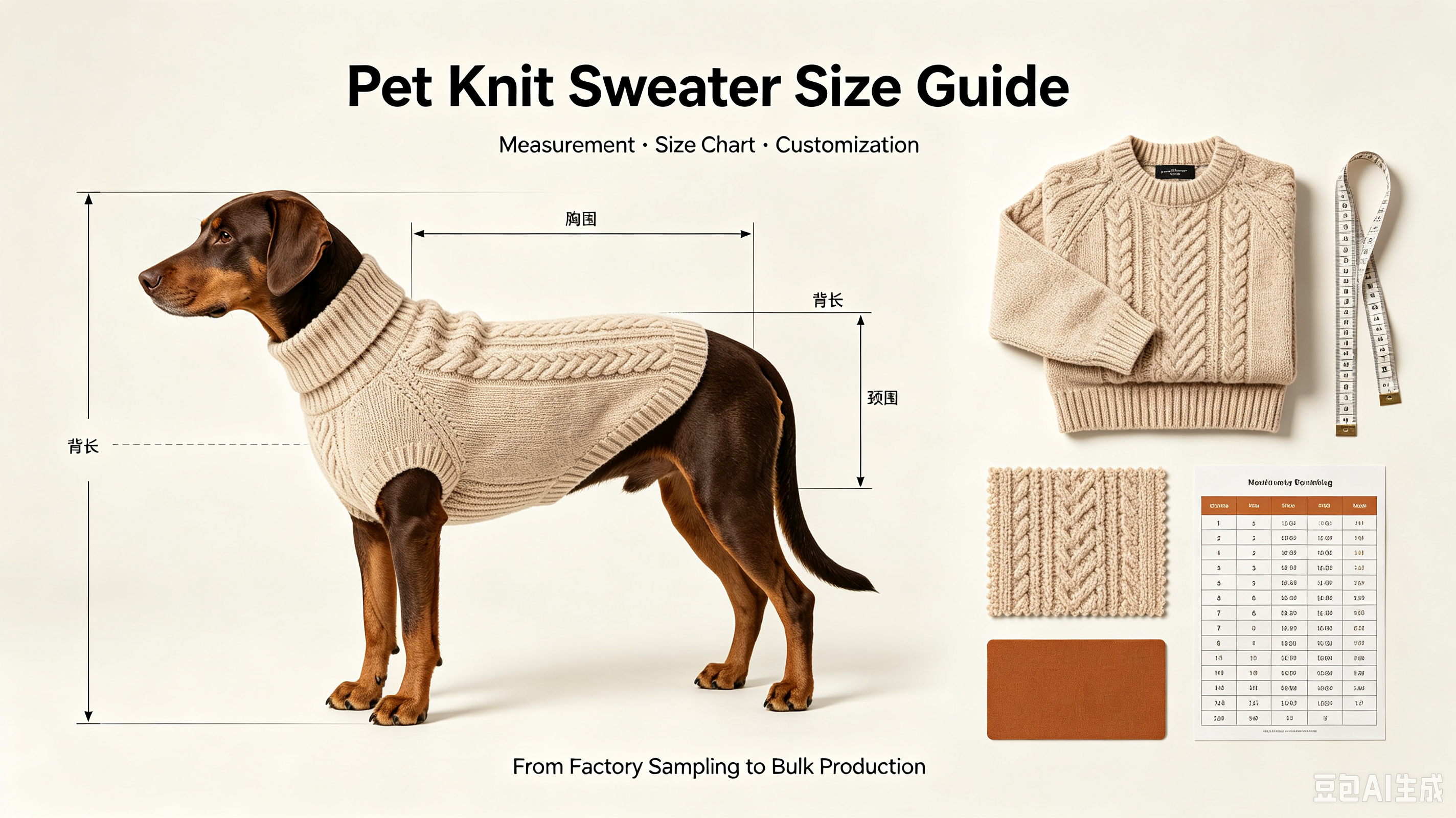
Designing pet knit sweaters requires three key measurements: chest circumference, back length, and neck circumference.
Chest circumferenceis the primary measurement. It is taken around the widest part of the chest, just behind the front legs. Due to the natural stretch of knit fabrics, the finished garment's chest circumference only needs to be 2–4 cm larger than your pet's actual chest measurement. Adding too much ease will result in a slouchy, ill-fitting silhouette.
Back lengthMeasured from the base of the neck (at the shoulder blades) to the tail root, this determines overall garment length. Excessive length restricts tail movement; insufficient length provides inadequate coverage.
Neck circumferenceMeasure around the widest part of the neck. Although knit collars stretch, allow 1–2 cm of ease. For pullover styles, also ensure enough room for head passage.
These three measurements are sufficient for pattern-making of conventional styles. For sleeved or one-piece styles, additional measurements such as front leg circumference and shoulder width are required.
2. Size Chart Development Standards
Pet apparel size charts typically include six sizes from XS to XXL, covering cats through medium and large dog breeds. Key considerations for developing a size chart include:
Size grading based on target breed body types.Body types vary significantly across breeds. We recommend determining size increments based on the body measurements of core-selling breeds. The standard increment is 3–4 cm for chest circumference and 2–3 cm for back length per size.
Incorporate knit fabric stretch coefficient.Knit sizing logic differs from woven apparel. Finished knit garments don't require excessive ease because the fabric's natural stretch provides sufficient room for movement.
Validate fit with sample garments.After finalizing the size chart, produce and test standard samples on pets with different body types to ensure paper measurements match real-world fit.
3. Common Issues in Custom Partnerships
Generic size charts without breed-specific adaptation.Some factories offer generic size charts designed for specific breeds, which can lead to sizing inconsistencies when applied across different breeds. For brand customization, the size system should be recalibrated based on your own customer base's body types.
Failed to reserve post-wash shrinkage allowance.Knit sweaters have a shrinkage rate. Standardized pattern-making must account for this when calculating dimensions. If the factory does not confirm shrinkage during sampling, bulk production may result in undersized garments.
No size recommendations provided for end users.E-commerce merchants should provide clear measurement instructions and size charts—ideally with illustrations—to reduce sizing errors and returns caused by incorrect measurements.
4. Factory Size Alignment Specifications
When confirming sizing with a factory, provide the following in writing: finished garment dimensions for each size, allowable tolerance range (typically ±1 cm), fabric shrinkage rate, and measurement method. The more specific the details, the lower the risk of bulk production deviations.
For new brands launching their first collection, produce one sample per size, confirm fit by testing on pets with different body types, then proceed to bulk production to avoid losses from sizing deviations.
About Dongguan Kaiyingmei Apparel Co., Ltd.
Dongguan Kaiyingmei Apparel is a Dongguan, China-based pet apparel manufacturer specializing in mid-to-high-end design, original development, and premium production. We focus on eye-catching original designs, exquisite craftsmanship, and high-end fabrics. Our product lines include luxury knit sweaters, human-pet matching sets, couture holiday collections, and other premium series—all crafted from skin-friendly, high-stretch, anti-pilling yarns with 3D tailoring and meticulous workmanship.
We offer exclusive brand custom designs, sample creation from reference images, premium design revisions, private labeling, embroidery, and printing. Sampling lead time is 3–5 working days; bulk production lead time is 7–15 days. We support small-batch premium custom orders. Our one-stop solution covers design, sampling, customization, and bulk supply for high-end pet boutiques, original pet brands, cross-border premium sellers, and luxury e-commerce stores.